Wednesday, May 30, 2012

Moon Township in a Development Upswing.


Moon Township is on a development upswing as more than 20 new development projects are underway in the area.  Walmart, a school, and a hilton hotel are just some of the things that the area has to look forward to in the next few years.  Many of these developments are taking place around the Cherrington Parkway.


An upturn in the economy and the planned Walmart construction on University Boulevard has renewed developers' interest in Moon Township, officials said.
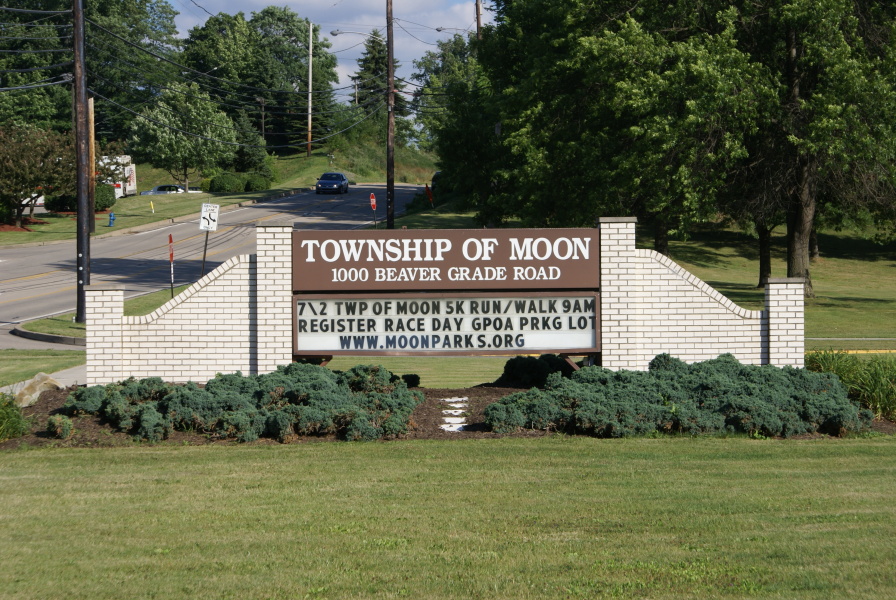


"Definitely looking back at the applications for 2011, it was a slow year for development plans," said Moon Planning Director Adam McGurk. "It's hard to say what it is, but it does say that the economy is picking up in terms of commercial development." 

McGurk said more than 20 projects are now in the construction phase in the township. 
Developers this year have unveiled plans for a new, 130,000-square foot Hilton hotel, slated to be constructed off Fed Ex Drive. The project was set to break ground in 2008, but developers backed out as the economy sank into a recession that year.

The 117-room Hilton Homewood Suites, which will be designed by the Pittsburgh-based Gateway Engineers, is still in the planning phases, but could break ground as early as this summer, developers said.  

The owner of the proposed Moon Township Goddard School for Early Childhood Development said he plans to open the school's doors in January 2013. The 8,500 square-foot building will sit on the cul-de-sac on Commerce Drive
Randy Forister, senior director of development at the Allegheny County Airport Authority, said a strengthening economy has sparked new interest in airport-area development.  

"We are seeing a lot more activity this year, much more so than in the last two years," Forister said. "I think it's the economy picking up, and I think that people in general like to be near the airport."

Forister said construction is set to begin later this year on the first, 53,000-square foot building in the Pittsburgh International Business Park, a planned campus of office buildings to be located off Cherrington Parkway.

Construction on the project will be phased over a ten-year period, and will take place on 40 acres of land adjacent to the Cherrington Corporate Center.

The project has been in the works for a number of years, Forrester said. In 2009, the Moon Transportation Authority and airport authority partnered to connect utility infrastructure in the area. Ohio-based Continental Real Estate, which developed the Waterfront in Homestead, and Cranberry Business Park developer Chaska Property Advisors, are spearheading the project. 

Allegheny County, which owns the property, is leasing the land to the joint venture. No tenants for the property have yet been announced. 

Forister said the project has helped "jumpstart development” in the area.

"You’re right by the airport. It's 19 miles from downtown so you have easy access there," he said of the Cherrington Business Park. "It's just going to be a great business location."  
Mark Handlovitch, a Robinson-based Remax broker, said commercial developers are eyeing the planned University Boulevard military commissary, which could draw military personnel from across the region to the township.

After a series of setbacks, construction on the 43,000-square foot regional commissary is expected to begin this year. The building, which will replace the existing Oakdale commissary, will be built on the corner of the Interstate 376 Business Route and University Boulevard. 

"There's definitely more interest in the airport corridor," Handlovitch said. "I think it's been stagnant for a while—really since the airport moved 20 years ago. But with projects like Walmart and the military commissary, you're going to have a lot of people coming into this township." 

Walmart, which announced plans to build a 150,000 square-foot store on the grounds of the former West Hills Shopping Center, is now working with PennDOT traffic engineers to obtain a highway occupancy permit, said PennDOT spokesman James Struzzi. No ground-breaking date is yet available for the project. 

Handlovitch said he believes Walmart’s arrival in the township could be a boon to area business. The project has been in the planning phases since the national retailer purchased the defunct shopping center in 2007.

The former plaza has been razed, leaving a vacant lot at the corner of University Boulevard and Brodhead Road. 

"There's good and bad that can come with it," said Handlovitch of the Walmart construction. "But the bottom line is, it was an old rundown plaza. If we want to see growth as a township, we need updated buildings and plazas. We need new development coming in."

For more information check out Moon Patch.

Monday, May 21, 2012

The gateway project in the historic Deutschtown neighborhood is set to revitalize the neighborhood and encourage development in this unique and important Northside business district.  This project includes refurbishing Victorian storefronts and adding business and administrative space in the area.


The Historic Deutschtown neighborhood is working to give the 50,000 cars that pass through it on a daily basis even more reason to pause.  The Deutschtown Gateway Project, which is currently underway, includes restorations of several Victorian storefronts on East Ohio Street, an effort that neighborhood organizations hope will improve the entryway of this important Northside business district.

Phase I of the Deutschtown Gateway Project is the complete restoration a Victorian-era commercial building's facade at 632 East Ohio Street.  Located near I-279, it is a highly visible landmark for commuters and visitors exiting the highway. 


Among other improvements, colored art glass windows, hidden for decades behind an earlier remodeling, will soon be restored. The building’s current tenant, Grace Period, plans to expand its administrative offices to a renovated second floor.


The restoration is part of a larger redevelopment plan of the Historic Deutschtown Development Corporation (HDDC) and the Northside Leadership Conference (NSLC). 


At 620-628 East Ohio Street, a combination restoration and infill construction project will add updated retail space to the block, whose buildings are mostly vacant.  The project will create 6,000 to 8,000 square-feet of horizontal commercial office space per floor, on the 2
nd and 3rd stories of this multi-parcel redevelopment.

According to NSLC Executive Director Mark Fatla, the project will bring a type of large office space the district currently lacks.


“We’ll be able to offer the office market what it wants,” Fatla says.


HDDC is also planning renovate several other buildings it owns, including 431, 433, and 502 East Ohio Street.


For more information check out: PopCity 

Wednesday, May 16, 2012

Ravenstahl Heads to Development Convention

Mayor Ravenstahl is heading to Vegas for the the International Council of Shopping Centers Convention.  Ravenstahl is setting up a booth at the convention, and hoping to explore some future development projects for Pittsburgh.  This includes a development project for the old site of the Mellon Arena. 


Mayor Luke Ravenstahl and the Urban Redevelopment Authority are sponsoring a booth at RECon, the annual Spring convention of the International Council of Shopping Centers    scheduled for Sunday, May 20 to Wednesday, May 23 in Las Vegas, Nevada.
City officials believe it is the first time the city of Pittsburgh has established a booth at the convention, which is expected to draw more than 30,000 attendees for four days of panel discussions, networking and deal-making for new development and shopping centers throughout the country. In the past, members of the city’s Urban Redevelopment Authority have attended the ICSC convention as visitors without renting trade show space.
Ravenstahl is scheduled to participate in a panel discussion with a host of other mayors, an event former mayor Tom Murphy also participated in more than 10 years ago at the ICSC Spring Convention.
Yarone Zober, chairman of the Urban Redevelopment Authority the mayor’s chief of staff, said the idea to attend the event came out of the Downtown retail working group, which Ravenstahl started to find new ways to recruit retail into the urban core. The retail working group was established in the wake of Saks Fifth Avenue    closing Downtown after decades in operation.
“The goal is to gain additional exposure for the city of Pittsburgh,” said Zober.
The subject came up at the URA meeting on May 10 when the board voted to approve $20,000 in funding for marketing materials by Wall to Wall Studios. Zober did not provide details on what the convention would cost and did not indicate how many people would be attending as part of the Pittsburgh contingent. With URA funds expected to be used to pay for the trip in a city that's long faced budget challenges, Zober expects attending RECon will prove a good investment, describing not investing in such events as “penny-wise and pound foolish.”

For more information: go to bizjournal

Friday, May 4, 2012

South Shore Riverfront Park opens


Glad to see this park finally open. It will be a great asset to South Side businesses and property owners.

The long-awaited South Shore Riverfront Park opened Wednesday, adding another piece to the SouthSide Works development and enhancing an important link in Pittsburgh’s riverfront trail system.


To celebrate the opening of the 3.4-acre park that spans from 25th to 29th streets, Pittsburgh Mayor Luke Ravenstahl, Riverlife and the Soffer Organization  hosted a tour that showed off the project’s amenities and charted what was still to come at the riverfront site.


The park was the culmination of the original plan for the redevelopment and was "a place where everyone is welcome to enjoy one of the city’s greatest assets, the rivers," said James Lee Soffer, vice president for the Soffer Organization, the developer of the 34-acre SouthSide Works.


At least a year behind schedule, South Shore Riverfront Park will cost a total of $13 million to develop, with a $3 million final phase expected to be completed next spring that will clean up the portion of the park closest to river, extending the trail to the water’s edge and adding a landing for a water taxi.


With $10.6 million in public funds and $2.6 million in private money invested, South Shore Riverfront Park includes a 1,000-seat amphitheater, a water fountain for dogs, and various artifacts from the site’s previous history as a Jones & Laughlin Co. steel mill, along with its trails. Also planned to be added to the park is a new 300-slip marina to be operated by David Maxwell, who operates a marina in O’Hara Township.


"The full economic impact of SouthSide Works will now be realized through this park,” said Ravenstahl.


Kyra Straussman, director of real estate for the city’s Urban Redevelopment Authority, said the park will be maintained through a partnership of the Soffer Organization, the URA and Riverlife, the riverfront advocacy nonprofit organization, starting from a $1 million fund. An assessment district for the SouthSide Works development is also being planned in which the project’s various tenants and business owners would pay a small regular fee for park maintenance and programming.


The URA has contracted with Dan Beiderman, a New York-based park consultant, to establish events at the park, added Straussman, along with pursuing promotions and sponsorships. Expect for a slow rollout of scheduled events this summer on trial basis, she added.


Read more at bizjournals.com.

Monday, April 23, 2012

Turning something old into something new in Pittsburgh

Pittsburgh is making older buildings new again.


South Hills High School opened its doors on Mt. Washington in 1917 and closed them in 1986.  The sprawling structure sat vacant for more than twenty years, during which time the Mt. Washington Community Development Corp. replaced the building’s roof and otherwise kept it stable.   A developer finally purchased the building from Pittsburgh Public Schools in 2006 and thanks to the keen eye of architects Rothschild Doyno Collaborative and Thoughtful Balance, it has been reincarnated as South Hills Retirement Residence, 106 units of senior housing with space for community assets such as a day care facility.  The project was recently awarded LEED Gold certification accruing to a mix of co-generation and solar photo-voltaic panels that provide 70% of the building’s power, among other sustainable features.
The South Hills project is a shining example of adaptive reuse, or the re-purposing of older properties for a use other than their original design.  Taking this route can be cheaper than new development, and financing for these projects is often easier to secure.  Pittsburgh is filled with older buildings eager to be re-imagined including office buildings with a prime downtown address and schools whose architectural pedigree has placed them on the National Register of Historic Places. 
Projects currently underway in the city include the RiverVue Apartments, 218 rental units in the former State Office Building that boast Point State Park as their front yard, and the expansion of 31st Street Studios, hulking former brick and metal warehouses that are morphing, Transformer-like, into Hollywood East in the shadow of the 31st Street Bridge.
Who are the next best candidates for adaptive reuse in Pittsburgh?  It all starts downtown at the James H. Reed Building on Sixth Avenue, former headquarters of the Reed Smith law firm.  The building’s elegant entrance screams “hotel!” and who better to do the retrofit than Kimpton Hotels, masters of adaptive reuse?  Imagine “Hotel Monaco” over the doorway and a jewel-toned lobby acting as the living room lounge urbanites crave.  Around the corner is the Henry W. Oliver Building designed by architect Daniel Burnham and close by is the Union Trust Building, whose stunning mansard roof commemorates the cathedral that formerly stood in its place.  Both structures are woefully underutilized and if commercial isn’t the answer, perhaps they’re prime for downtown residential?
Then there’s the question of downtown retail, which has been debated for decades.  Lord & Taylor kept shop in the former Mellon National Bank Building on Smithfield but that structure has been vacant since 2003, and Saks Fifth Avenue has exited its shiny black cube across the street. 
Is it time for the city to rethink large-scale urban retail in favor of cultural attractions?  It’s no secret that business is booming at the Benedum.  Even so, not everyone agrees.  “The mayor is committed to marketing as many properties as he can at the upcoming shopping center conference in Las Vegas,” says Robert Rubinstein, director of economic development for the Urban Redevelopment Authority.  “If owners throw their property into the mix, the city can market a collection of shopping spaces.  Retailers want to come in a pack.”
Eager to revive a one-time cultural gem is Marimba Milliones of the Hill Community Development Corp., which owns the New Granada Theater on Centre Avenue where Duke Ellington, Ella Fitzgerald and Cab Calloway once played.  The 1927 Art Deco building possesses National Landmark status and has already undergone a stabilization process.  Its next act awaits.  “From a regional standpoint, it’s one of the hottest reuse options available,” according to Milliones.


Read more: http://keystoneedge.com/features/pittsburghadaptivereuse0405.aspx

Wednesday, April 18, 2012

Energy firms looking to Downtown for office space

Great news for Pittsburgh! Energy firms such as Chevron, Shell and Exxon are looking for office space downtown.

While most oil and gas interests have settled in the suburbs, some may now be casting an eye to the Golden Triangle as space in places like Cranberry and Southpointe gets tighter and tighter.

One major corporation, Chevron, is said to be considering Downtown in its search for more than 140,000 square feet of space to consolidate and expand its operations in the region.

Allegheny County Executive Rich Fitzgerald said he has heard that Chevron and two other major energy companies, Shell Oil Co. and Exxon, are interested in space Downtown as well as in the suburbs.

"I think that bodes well for this region that there is competition for these sites. That's something we didn't have a few years ago, and that's a good problem to have," he said.

Likewise, Mark Popovich, senior managing director of the Pittsburgh office of Holliday Fenoglio Fowler LP, a commercial real estate brokerage, said he has heard talk Chevron and Shell could be looking for space Downtown.

"I don't know if we're hearing wishful thinking or speculative thinking, or if there's something real behind it," he said.

California-based Chevron established operations in the region in February 2011 after paying $4.3 billion to acquire Moon natural gas producer Atlas Energy, which was active in tapping Marcellus Shale deposits. The company currently occupies about 140,000 square feet in Moon, including 60,000 at the Cherrington office park.

Shell now occupies 77,000 square feet of space in Waterfront Corporate Park in Franklin Park. It also has another 30,000 square feet in Warrendale as part of its $4.7 billion purchase of East Resources Inc. in 2010.

But with Shell's decision to build an ethane cracker plant in Beaver County, the company may want to raise its profile in the region and that could lead it Downtown, Mr. Popovich said.

Read more: http://shale.sites.post-gazette.com/index.php/news/archives/24478-downtown-catching-eyes-of-energy-firms

Friday, April 13, 2012

Spotlight on Sustainability: Pittsburgh’s Waterfronts

Check out this interesting article on how Pittsburgh is transforming the “Steel City.” Have you noticed the change to the city’s riverfront?

“Pittsburgh’s riverfronts were used as transportation corridors for industrial production, and were characterized by factories, barges and pollution,” Andrews said. “While the environment has improved since then, the land surrounding them has remained relatively unchanged. The riverfronts were designed around industry rather than the community, and the land around them does not connect to our neighborhoods.”

Concerned community members are working to make better use of these parts of town, which otherwise would continue to deteriorate.

“Today we recognize the riverfronts as our most treasured assets that have tremendous potential to improve our quality of life,”stated Mayor Ravenstahl, who initiated the Allegheny Riverfront Vision, a plan to restore the riverfront corridor.

In 2010, the city received 1.5 million in funding from the Department of Transportation’s TIGER II (Transportation Investment Generating Economic Recovery) grant program and a Community Challenge planning grant from the U.S. Department of Housing and Urban Development (HUD) to implement a central aspect of Allegheny Riverfront Vision: the Riverfront Green Boulevard Plan.

“I want to thank all of our partners in the federal government for recognizing the importance of this project that will spur economic development and ensure that Pittsburgh sustains its ‘most livable city’ status for years to come,” Ravenstahl added.

The grant allowed the City of Pittsburgh, Allegheny Valley Railroad, Urban Redevelopment Authority of Pittsburgh, andRiverlife to create a plan to transform an existing 6.45-mile stretch of freight rail along the Allegheny Riverfront into a multi-modal transportation corridor that includes park access, open space programming, neighborhood design, stormwater management and habitat restoration.

Read more: http://www.smartgrowthamerica.org/2012/04/02/spotlight-on-sustainability-pittsburghs-waterfronts/

Twitter Delicious Facebook Digg Stumbleupon Favorites More